Vulnerability management: from inventory to vulnerability with CyberITAM
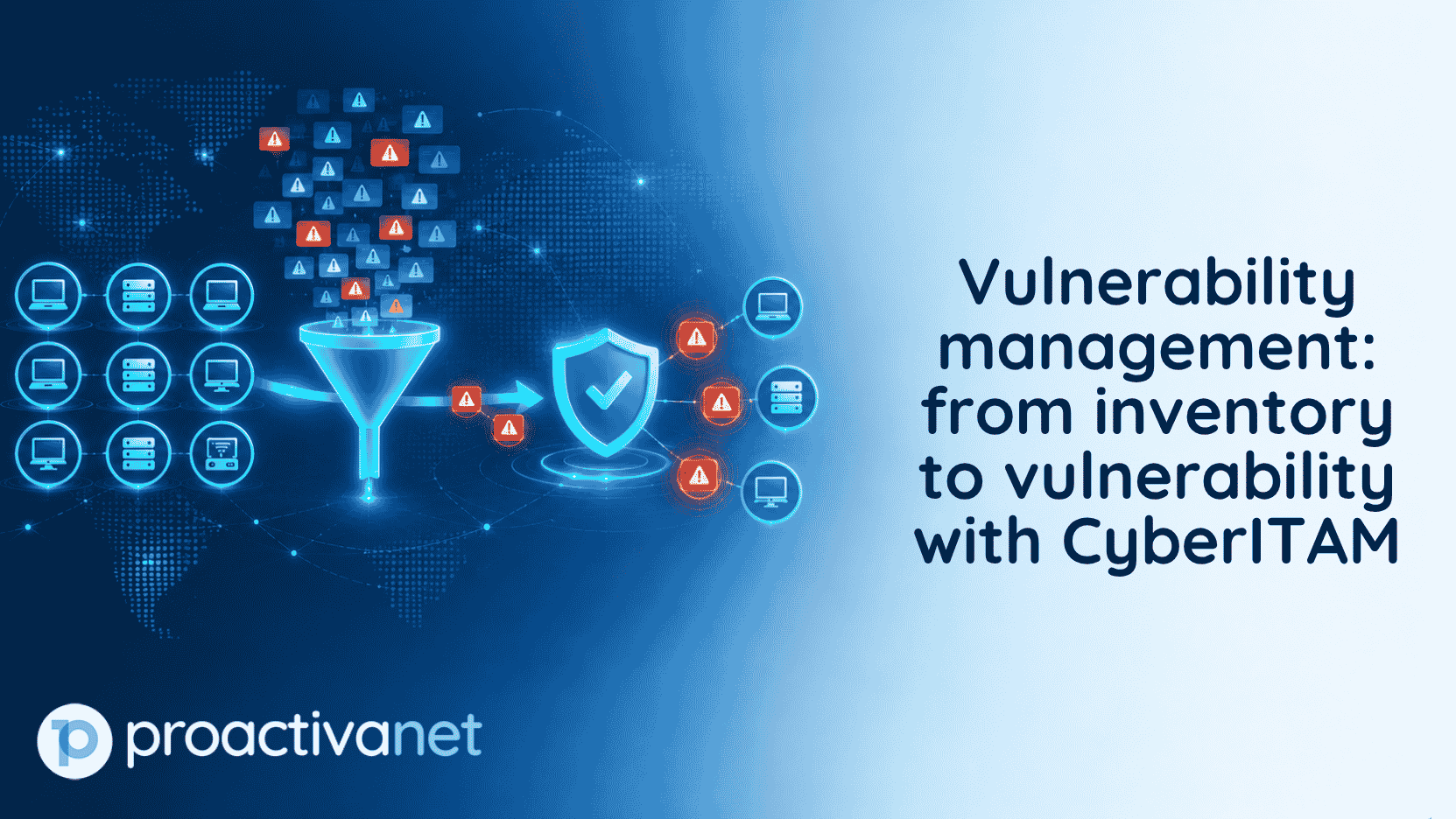
Vulnerability management starts long before you read a security bulletin: it starts with the inventory. Dozens of new vulnerabilities are published every day, and the question that matters is not how many there are, but which ones really affect your devices.
At Proactivanet we sum it up with a phrase we often repeat: you are not doing cybersecurity if you are not doing ITAM. You cannot protect what you do not know, and you cannot prioritise a vulnerability if you do not know which assets it is on.
In short (last updated: 19 October 2026)
- Effective vulnerability management matches published vulnerabilities against the real software on each device.
- CyberITAM checks sources such as INCIBE, MITRE and NVD every day and links only the vulnerabilities that apply to each asset.
- It prioritises by severity and likelihood of exploitation, and reduces false positives with built-in AI.
- It detects pending Windows patches and third-party software updates, and can deploy them automatically.
- It sends real-time alerts to the SOC or SIEM and creates tickets automatically in the Service Desk.
The problem: too many alerts, too little context
Security teams receive lists of potential vulnerabilities every day. The information is valuable but generic: it does not say whether that software is installed in your organisation, on how many devices or in which version. The result is an overflowing inbox and the feeling of not knowing where to start.
Vulnerability management: from inventory to vulnerability
The key is to turn the process around. Instead of starting from the vulnerability and looking for where it might be, you start from the inventory and match it against what is published. This is how vulnerability management works in CyberITAM:
- A complete, automatic inventory. Discovery & Asset Management knows the software and version installed on each device.
- An always up-to-date vulnerability database. New vulnerabilities published by sources such as INCIBE, MITRE and NVD are added every day.
- Automatic linking to assets. Each vulnerability is associated only with the devices it applies to, and built-in AI helps eliminate false positives.
- Prioritisation. Vulnerabilities are ranked by severity, likelihood of exploitation and age, in a consolidated list.
- Remediation and follow-up. Applied remediations are detected automatically, and you can track progress over time.
Patches and updates: closing the gap
Finding the vulnerability is half the job; the other half is fixing it. CyberITAM detects pending Windows patches on each device, with a global view (for a given patch, where it is missing) or an individual view (for a given device, what it is missing), and lets you deploy them automatically and unattended. It also detects pending updates for the most common third-party software on Windows.
Vulnerability management connected to the SOC and the Service Desk
- Automatic tickets in the Service Desk for security alerts.
- Alerts visible in the CMDB, to see which services depend on the affected asset.
- Real-time events to the SOC or SIEM via REST API and webhooks, plus integration with external vulnerability scanners.
- Multichannel notifications by email, SMS, WhatsApp, Microsoft Teams or Telegram, depending on criticality.
CyberITAM tiers
CyberITAM is available in three tiers to match each organisation's maturity:
| Tier | Who it is for |
|---|---|
| Standard | Basic control of the fleet's security posture: antivirus, firewall, encryption, VPN and Windows patches. |
| Advanced | Organisations that need more detail and multiplatform capabilities, operating system lifecycle and evidence for ENS, NIS2 and DORA. |
| Enterprise | The most complete tier, with additional capabilities such as automatic deployment of third-party software updates. |
CyberITAM also generates evidence for ENS, NIS2 and DORA audits, turning vulnerability management into a compliance argument, not just a security one. With offices in Spain, Mexico, Colombia, Peru and Chile, we support you with each country's regulatory framework.
Frequently asked questions about vulnerability management
What is inventory-based vulnerability management?
It means matching the vulnerabilities published by official sources against the software actually installed on each device, so you only keep the ones that really affect your organisation.
Where does CyberITAM get its vulnerability data?
From a centralised database updated daily with sources such as INCIBE, MITRE and NVD, automatically linked to the assets in the inventory.
How are vulnerabilities prioritised?
By severity and likelihood of exploitation, in a consolidated list that can also be sorted by age.
Does vulnerability management integrate with the SOC or SIEM?
Yes. CyberITAM sends real-time events via REST API and webhooks, and can automatically create Service Desk tickets for security alerts.
Want to see it live? On Thursday 19 November at 16:00 (Spain time) we are presenting CyberITAM Advanced and Enterprise in a webinar. And if you would rather not wait, request a Proactivanet demo and we will show you your real vulnerabilities, device by device.


Windows 10 end of support: ESU doubles in price and it is time to decide

Cyber Resilience Act: what changes with the obligation to report vulnerabilities