IT Asset Management (ITAM): Where Does Inventory End and Strategy Begin?
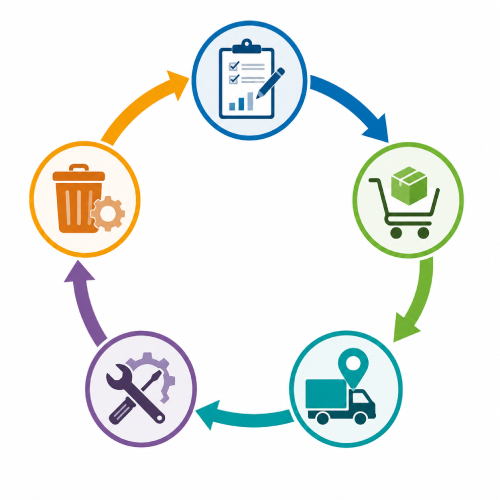
The IT Asset Management (ITAM) is the set of business practices that integrate technology resources across all business units. Its goal is to support the asset lifecycle, control costs, and support strategic decision-making.
Unlike a simple inventory, professional management allows you to align your infrastructure with the organization's financial and security goals. In short, it means moving beyond simply “knowing what we have” to understanding “how it adds value,” while automatically managing risks.
1. What is IT Asset Management (ITAM)?
To put it simply: it is the process of ensuring that a company’s technological tools are accounted for, deployed, maintained, updated, and disposed of when the time comes. It’s not a static Excel spreadsheet; it’s a dynamic system that links technical data to the financial inventory.
Many managers struggle with "blind inventory". They believe they have control because they know how many laptops they purchased, but they are unaware of how many AWS instances are active but unused, or which departments install software without going through the procurement process.
Key points of this approach:
Complete visibility: Hardware, software, and cloud (SaaS) asset management.
Cost Control: Elimination of underutilized licenses and shelfware.
Legal Compliance: Avoid hefty fines during software audits.
Security: Detection of unauthorized or vulnerable assets.
Life cycle: Management from acquisition to final disposal.
2. Differences Between Inventory and Strategic Management
It's common to confuse these terms, but the difference is enormous. While inventory is a snapshot of “what’s there,” ITAM is a complete record of the entire lifecycle.
A manual inventory is usually out of date the minute it's finished. In contrast, a modern strategy uses discovery tools to automatically detect any changes in the network.
| Característica | Basic Inventory | Asset Management (ITAM) Google Docs |
| Scope | Enter the device name. | Track who is using it and its associated licenses. |
| Update | Manual and error-prone. Google Docs
| Automated in real time. |
| Finance | Initial purchase cost only. | Warranty Expiration and Residual Value. |
3. Shadow IT: The Invisible Software on Your Network
One of the biggest challenges today is Shadow IT. This refers to all the cloud-based applications and services that employees use without the IT department’s knowledge.
This "invisible" software poses a critical security risk and a financial black hole. Implementing a robust solution makes it possible to identify these vulnerabilities and centralize control, transforming the risk into an opportunity for optimization.
4. Strategies for Reducing Cloud Costs
In the age of SaaS, license waste is rampant. Proper execution of these processes allows:
Identify users who haven't logged in for 30 days.
Downgrade "Premium" licenses to basic versions based on actual usage.
Consolidate contracts to obtain better volume discounts.
5. Why an Automated CMDB Is Better Than a Thousand Excel Sheets
If your IT treasure map is in a file, you have a problem. The Configuration Management Database (CMDB) is the heart of service and asset management.
An automated CMDB aligned with international standards such as the ISO/IEC 20000 enables:
View dependencies between services and assets.
Predicting the impact of a change in infrastructure.
Maintaining the "single source of truth" for data without human error.
6. Frequently Asked Questions (FAQ)
1. What is the main benefit of implementing these processes?
The biggest benefit is the financial savings. It is estimated that companies can reduce their software spending by up to 30% in the first year by eliminating unused licenses.
2. How does it help with cybersecurity?
It helps identify unauthorized devices connecting to the network and outdated software that could serve as a gateway for attacks. You can’t protect what you don’t know exists.
3. Are ITAM and ITSM the same thing?
No, but they're related. The former focuses on the value and lifecycle of assets, while ITSM (IT Service Management) focuses on service delivery. Both converge on the CMDB.
Conclusion and Next Steps
This discipline is not a luxury; it is an operational necessity in a complex digital world. Moving from manual inventory to automated strategic management protects your budget and your security.
Do you want to stop working blindly? At Proactivanet we help organizations take full control of their resources with industry-leading tools.
Learn about our license management success stories and request a personalized demo today.
Under the Hackers' Microscope: The Wave of Cyberattacks in 2026
Investment in Cybersecurity: The Financial Strategy Companies Can No Longer Ignore